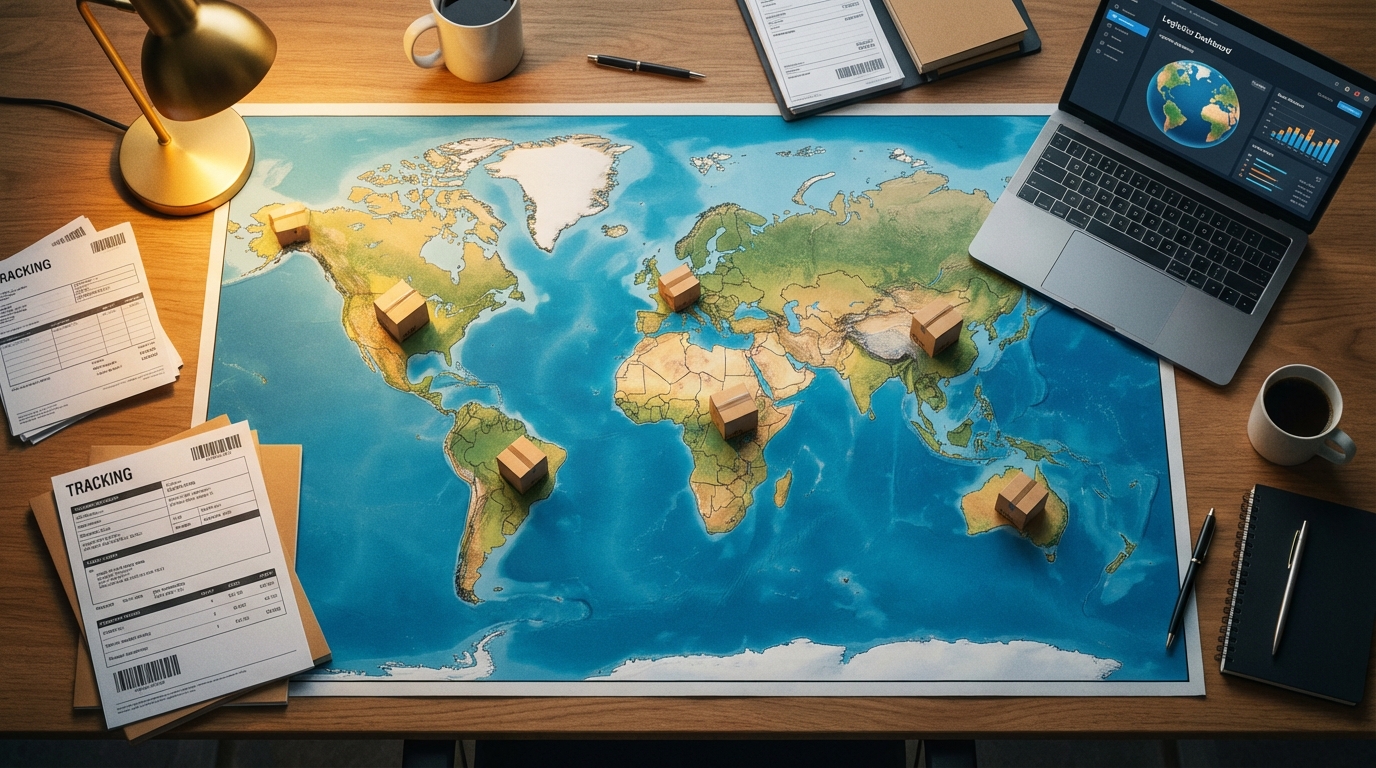
We ship to over 140 countries. That's a fact we're genuinely proud of, and it's something we mention often. But we'd be doing our customers a disservice if we didn't also talk honestly about what international shipping actually looks like in practice. Because the truth is, it's not always fast, it's not always simple, and it's not always predictable.
This article is our honest guide to what you should expect when you order something that needs to cross borders. We're writing this for our own customers, but the information applies to any online purchase that involves international shipping. Our goal is to set realistic expectations so that you're never caught off guard.
How International Shipping Actually Works
When you place an order with an online store that ships internationally, your package goes through several distinct stages. Understanding these stages helps explain why delivery timelines are longer and more variable than domestic shipping.
Stage 1: Order Processing and Warehouse Dispatch
After you place your order, the store processes it: verifying payment, pulling the product from inventory, packing it, and generating a shipping label. Depending on the store, this can take anywhere from one to three business days. At CartClick, we aim to process and dispatch orders within 24 to 48 hours on business days.
Stage 2: First-Mile Carrier Pickup
Once packed, the package is picked up by the initial carrier. This carrier transports it to a sorting facility, where it's grouped with other international shipments heading to the same region. Depending on the warehouse location and carrier schedules, this stage can add one to three days.
Stage 3: International Transit
This is the longest part of the journey. Your package travels from the origin country to the destination country, typically by air for smaller parcels or by sea for larger shipments. Air transit itself is relatively quick, usually a few days, but packages don't fly point-to-point like passenger flights. They move through carrier hubs, are consolidated with other shipments, and may stop at intermediate sorting facilities along the way.
Stage 4: Customs Clearance
When your package arrives in the destination country, it enters customs. This is the stage that introduces the most unpredictability. Customs authorities inspect incoming packages, assess duties and taxes where applicable, and verify that the contents comply with import regulations. Most packages clear customs within one to three days, but it can take longer during busy periods or if additional documentation is required.
Stage 5: Local Carrier Delivery
After clearing customs, your package is handed off to a local carrier (your country's postal service or a local delivery company) for the final leg of the journey. This is called "last-mile delivery," and it adds another one to five business days depending on your location. Urban areas are typically faster. Rural or remote addresses can take longer.
Typical International Timeline
For most destinations, expect 7 to 21 business days from order to delivery. The most common range we see is 10 to 14 business days. Some destinations are consistently faster (major cities in Western Europe, Australia, Canada), while others are consistently slower (remote areas, regions with complex customs processes).
What "Express" Actually Means Internationally
Express shipping is one of the most misunderstood terms in international e-commerce. When you hear "express," you probably think of overnight or two-day delivery. And for domestic shipping, that's often exactly what it means.
Internationally, "express" typically means the package moves through premium carrier networks (like DHL Express, FedEx International, or UPS Worldwide) with faster customs processing and better end-to-end tracking. It does not mean overnight delivery. For most international routes, express shipping delivers in 3 to 7 business days, compared to 10 to 21 days for standard shipping.
Express is faster, but it's proportionally faster. If standard shipping takes two weeks, express might take one. If standard takes three weeks, express might take 10 days. It's a meaningful improvement, and it's worth paying for if time matters to you. Just don't expect domestic-level speed on an international route.
Customs and Duties: The Part Nobody Likes
Here's the part of international shipping that catches the most people off guard: customs duties and import taxes. Depending on the destination country, you may be charged additional fees when your package arrives. These fees are assessed by your country's customs authority, not by the store you bought from.
The amount varies based on the product category, its declared value, and the specific import regulations of your country. Some countries have a minimum threshold below which no duties are charged. Others charge duties on virtually everything.
What Stores Can and Can't Control
This is an important distinction. Stores can accurately declare the contents and value of your package on the customs form. What they can't control is what your country's customs authority decides to charge you. Duties and taxes are set by national governments, and they vary enormously from one country to the next.
Some stores offer "DDP" (Delivered Duty Paid) shipping, which means they estimate and prepay the duties so you're not surprised at delivery. This is a premium service and it's reflected in the shipping cost. Most stores, including CartClick for standard international orders, ship "DDU" (Delivered Duty Unpaid), which means any applicable duties are the buyer's responsibility.
We always recommend checking your country's import thresholds before ordering internationally. A quick search for "[your country] import duty threshold" will usually give you a clear answer. Knowing this in advance eliminates the most common surprise in international shopping.
Tracking: What to Expect and What Not To
Tracking is another area where international shipments differ from domestic ones. When you order something domestically and get a tracking number, you can usually follow your package in near-real-time from warehouse to doorstep. International tracking is less granular.
Here's what typically happens with international tracking:
- Initial scan: You'll see the package picked up and scanned at the origin facility. This confirms it's in the system.
- Transit gap: Once the package leaves the origin country, there's often a period where tracking doesn't update. This can last several days and it's completely normal. The package is in transit between countries, and tracking systems don't always communicate across borders in real time.
- Destination scan: When the package arrives in the destination country and clears customs, tracking typically updates again.
- Local updates: Once it's with the local carrier, you'll see delivery-stage updates similar to what you'd expect from a domestic package.
The transit gap in stage two is what causes the most anxiety. We get messages from customers saying "my tracking hasn't updated in four days" and understandably worrying that something is wrong. In the vast majority of cases, the package is simply between origin and destination, moving through carrier networks that don't update tracking at every step. If tracking hasn't updated in more than ten business days, that's when it's worth reaching out to support.
Tips for a Smooth International Delivery
Based on years of shipping to over a hundred countries, here's what we recommend:
- Provide a complete address: Include apartment or unit numbers, postal codes, and any local delivery instructions. Incomplete addresses are one of the top causes of delayed deliveries.
- Use a phone number: Many international carriers use your phone number to coordinate delivery or notify you about customs clearance. Include a number where you can be reached.
- Be patient during transit gaps: Tracking not updating for a few days during international transit is normal, not a sign of a lost package.
- Know your country's customs rules: A few minutes of research before you order can prevent confusion at delivery time.
- Keep your confirmation email: Your order number is the fastest way for any support team to look up your shipment status. As we covered in our smart shopping guide, saving that email is one of the simplest and most valuable habits you can build.
When Things Go Wrong
We're not going to pretend that every international shipment arrives perfectly. Packages do occasionally get delayed in customs, stuck at a sorting facility, or delivered to the wrong address. It happens, and when it does, here's what we recommend.
First, contact the store's support team with your order number and tracking information. A good support team can investigate the shipment, contact the carrier, and give you a realistic update. At CartClick, our team aims to respond within 24 hours and will proactively track down your package if something seems off.
Second, be specific about the problem. "My package hasn't arrived" is a start, but "my tracking shows the package has been in customs for eight days with no update" gives the support team much more to work with. Our guide on getting the most out of customer support has more tips on this.
Why We Still Ship Everywhere
Given all these complexities, you might wonder why we bother shipping internationally at all. The answer is simple: our customers are everywhere, and they deserve access to the same curated products regardless of where they live. International shipping is harder and more expensive than domestic shipping, but the alternative is telling customers in 140 countries that they can't shop with us. That's not who we want to be.
We'd rather be honest about the realities, set accurate expectations, and then work hard to deliver the best possible experience within those realities. International shipping isn't perfect, but it's getting better every year, and we're committed to making it as smooth as we can for every customer, no matter where their package is headed.